
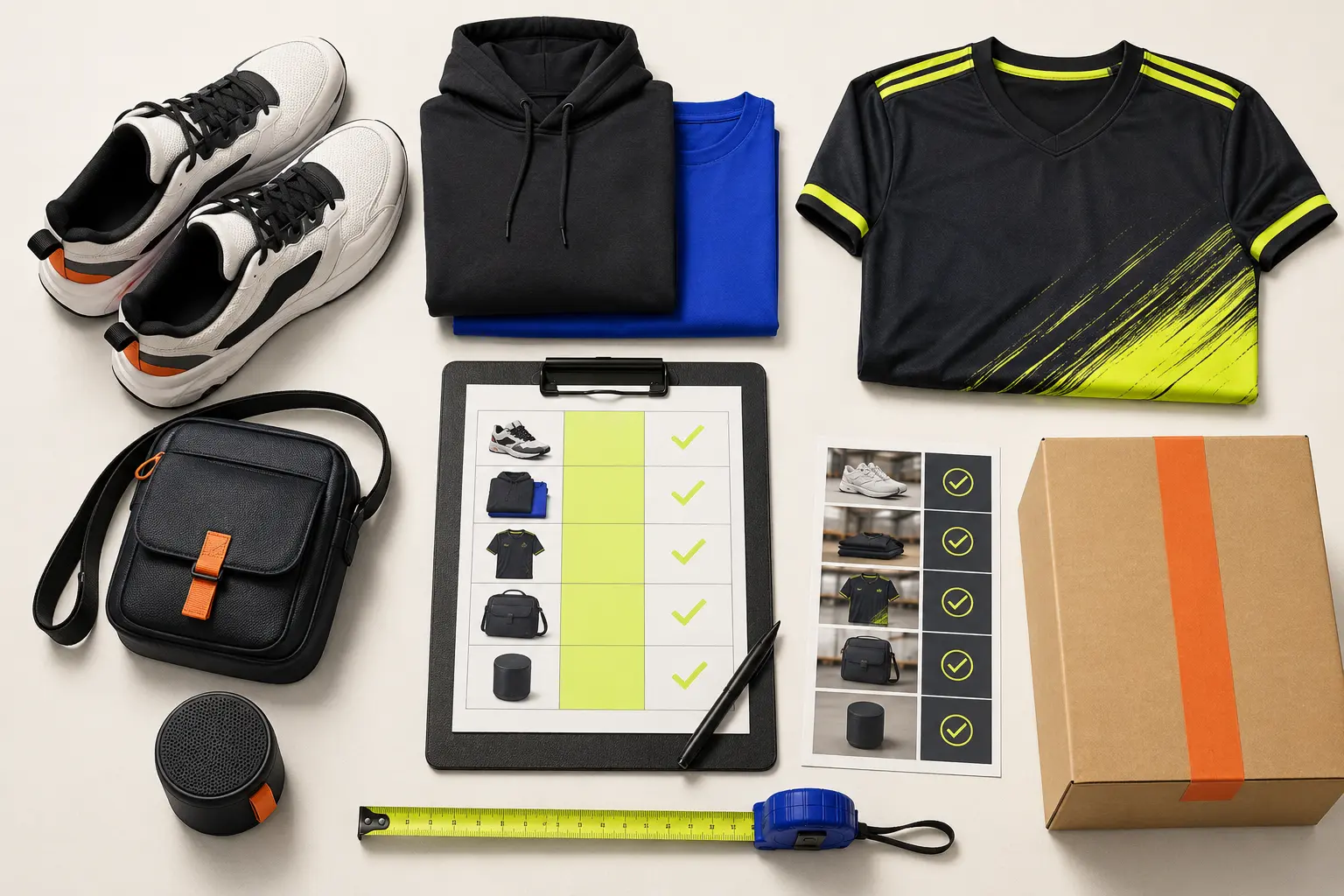
| Category | Before ordering | Warehouse QC | Shipping risk | Category entry |
|---|---|---|---|---|
| Shoes | Foot or insole length, exact size and color | Pair alignment, sole, finish, ruler photo | Rigid box and crush protection | CSSBuy Shoes Spreadsheet ↗ |
| Clothing | Flat garment measurements and exact print | Size label, seams, hardware, marks | Bulky hoodies and jackets add volume | CSSBuy Clothing Spreadsheet ↗ |
| Jerseys | Fan or player cut, print and patch options | Front, back, badge, name and number | Protect prints from hard folds and heat | CSSBuy Jersey Spreadsheet ↗ |
| Bags & accessories | Dimensions, included parts and materials listed | Interior, straps, zips, shape and scratches | Support structured shapes; check components | CSSBuy Accessories Spreadsheet ↗ |
| Electronics | Model, plug, battery, compatibility and route | Label, visible condition and included parts | Restricted routes, protection and insurance terms | CSSBuy Electronics Spreadsheet ↗ |
This independent article is based on CSSBuy’s public workflow, warehouse information and shipping estimator. Current order conditions, account deadlines and the selected route remain controlling.
Why a category-first CSSBuy spreadsheet is more useful
A spreadsheet with thousands of mixed rows can look comprehensive while making comparison harder. Shoes, jerseys, jackets, bags, and electronics do not fail in the same ways, and they do not create the same parcel questions. A category-first index reduces repetitive scrolling and places similar products together so shoppers can compare the information that matters for that type of item. It also gives a search engine a clear page for specific queries such as “CSSBuy shoes spreadsheet” instead of forcing every search intent onto one generic page.
Category organization does not make a product safer or better. It makes the research task clearer. Every category should still lead to an individual product page with a current price, images, options, and a visible check date. Once a product is selected, CSSBuy's official process remains the same: purchase and domestic delivery form the first stage; warehouse receipt and inspection come next; international parcel submission and shipping form the second paid stage.
Use browsing when the idea is broad and search when it is exact
Start with a category when you know the product type but not the specific model—for example, a lightweight jacket, football jersey, or pair of runners. Category pages help reveal price ranges, common option patterns, and the checks that repeat across comparable listings. Use keyword search when you already know a product name, team, garment type, material, or style. A good search keeps the shopper's actual phrase instead of replacing every query with a generic all-products result.
CSSBuy's public site accepts a product URL or a keyword, reflecting two common buying paths. A marketplace URL is usually the better input when the exact listing is already known, because it reduces ambiguity. A keyword is more useful during discovery. In either case, verify the exact seller page and option before payment. Similar product photographs can lead to different materials, measurements, bundles, or sellers.
Shoes: size evidence, pair alignment, and parcel volume
For shoes, the familiar size number is not enough. Look for a chart in centimeters and identify whether it refers to foot length, removable insole length, internal length, or outsole length. Compare the same type of measurement with a pair that fits. Check whether the selected option includes a box and whether the seller's main image shows the exact color. A low headline price may represent a different size range, accessory, or version, so select the SKU before recording the cost.
At the CSSBuy warehouse, confirm that both shoes match in size, color, shape, and visible finish. Inspect toe shape, heel alignment, outsole pattern, obvious glue, stains, and crushing. Ask for a ruler photo if sizing remains uncertain. Shoe boxes can add significant parcel volume; removing one may lower volume but also reduce protection. Decide based on the shoe structure and your tolerance for deformation, not from a universal “always remove boxes” rule.
Hoodies, T-shirts, and jackets: measurements before labels
Clothing listings often use the same letter labels across very different measurement charts. Compare flat chest width, shoulder, sleeve, and garment length with clothing you already own. Note whether the seller recommends a body size or gives the actual garment measurement, and whether the fabric is described as stretchy. The exact color and graphic option should be saved with the order because translated names can be vague. If the material description matters, ask before payment rather than inferring it from a studio photograph.
Warehouse photos can confirm visible style, selected size label, color, print placement, obvious marks, and overall shape. They cannot prove fabric composition or warmth. For a jacket, check zippers, snaps, pockets, missing pieces, and apparent filling distribution. Thick hoodies and puffer jackets may be light but bulky, so their international cost can be driven by parcel dimensions. Compression may reduce volume, but aggressive packing can crease structured pieces or damage prints.
Jerseys: version, print, patches, and fit
A football jersey listing may contain fan versions, player versions, youth sizes, long sleeves, short sleeves, player names, and optional patches under one page. Select every element deliberately. A player version commonly has a closer cut than a fan version, so compare the specific measurement chart rather than transferring a size choice between versions. Check whether a name and number are included in the displayed price or added as a paid option.
When warehouse photographs arrive, match the team, season or design, size label, player print, sleeve patches, badge placement, sponsor print, and collar. Look for visible lifting, crooked positioning, stains, or missing elements. Standard photos may not show the back or every sleeve, so request the necessary view before approving shipment. Printing can be damaged by heat or folding; choose packaging that avoids severe creasing and follow appropriate care after delivery.
Accessories and bags: dimensions, hardware, and included parts
Accessories are easy to misjudge because a photograph does not communicate scale. Confirm length, width, depth, strap range, and interior capacity in centimeters. For a bag, examine closure type, pocket arrangement, strap attachment, and whether small accessories shown in promotional photos are actually included. For hats or headwear, check circumference or adjustability. For watches or similar items, verify the exact model and materials described without assuming appearance proves specification.
Warehouse inspection should cover visible color, quantity, included parts, stitching, hardware, zippers, shape, scratches, and major construction flaws. Ask for interior and measurement photographs when they are missing. Structured bags may require internal support or careful packing, while soft accessories may consolidate easily. Metal, batteries, liquids, magnets, or other components can also affect route availability, so the product category name alone is not enough to predict shipping.
Electronics: route eligibility and limits of visual QC
Electronics deserve a separate category because batteries, plugs, magnets, and radio components may restrict the shipping lines available to a destination. Confirm the model, voltage, plug, included cable, battery status, and seller description before paying. Check current CSSBuy route rules for the item rather than relying on an old list, because carriers and customs requirements can change. A product that can be purchased in China is not automatically eligible for every international route.
Warehouse photographs can show the model label, visible condition, quantity, plug, and included accessories, but they do not establish battery health, electrical safety, regulatory compliance, internal components, or long-term operation. Ask what testing, if any, is available, and do not describe a photographed device as “quality checked” beyond the visible inspection actually performed. High-value or fragile electronics also require deliberate packaging and a clear understanding of current insurance coverage and exclusions.
Move from a category find to a CSSBuy order
Once a category helps you identify a product, reopen the exact listing and select the variation. Record the product price and domestic delivery shown for the first stage. If a marketplace URL is available, submit that exact address through CSSBuy and make sure the order notes identify anything translation could confuse. CSSBuy says orders are usually handled within 24 hours after payment, but “usually” is not a delivery guarantee; seller dispatch and domestic transport still affect warehouse arrival.
When the order reaches the warehouse, compare the received item with the category-specific checklist instead of approving it automatically. CSSBuy's published basic inspection covers visible attributes such as style, quantity, color, size, model, and damage. Use extra photographs or measurements for details the standard set does not reveal. If a return is necessary, act quickly: CSSBuy's public FAQ describes a seller-accepted return while the item has been in the warehouse for fewer than seven days, with return delivery paid by the shopper.
Quick category decision checklist
Before opening a product, choose the category that matches the decision you actually need to make. Use Shoes when fit depends on foot or insole length and box volume matters; Clothing when flat garment measurements and print or hardware checks matter; Jerseys when version, player print, patches, and front-and-back evidence matter; Accessories when dimensions, included parts, and structure matter; and Electronics when specifications, batteries, testing limits, route eligibility, and protective packing matter.
Then follow the same five-step decision in every department: open the individual listing, select the exact option and current CNY price, compare usable measurements, write down the warehouse photographs or measurements needed, and leave enough budget for packaging and the second international-shipping payment. A category makes discovery faster; the current seller page and warehouse evidence decide whether the item should enter a parcel.